
Showing posts with label Sustainable Sites. Show all posts

Tuesday, September 11, 2007

Heat Island Effect


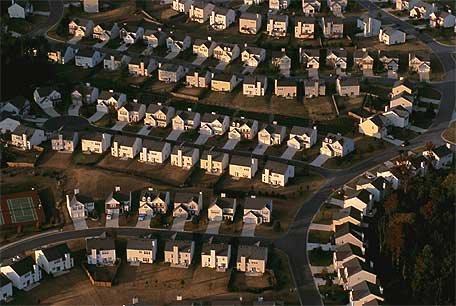
The term "heat island" refers to urban air and surface temperatures that are higher than nearby rural areas. Many U.S. cities and suburbs have air temperatures up to 10°F warmer than the surrounding natural land cover.

Heat islands form as cities replace natural land cover with pavement, buildings, and other infrastructure. These changes contribute to higher urban temperatures in a number of ways:

- Displacing trees and vegetation minimizes the natural cooling effects of shading and evaporation of water from soil and leaves.

- Tall buildings and narrow streets can heat air trapped between them and reduce air flow.

- Waste heat from vehicles, factories, and air conditioners may add warmth to their surroundings, further exacerbating the heat island effect.


SS Credit 7.1: Heat Island Effect – Non-Roof
SS Credit 7.2: Heat Island Effect - Roof
Friday, August 10, 2007

SS: Sustainable Sites


14 possible points

This section focuses on how to minimize negative impacts from the development and construction process and how to improve on previously contaminated sites.

Prereq 1: Construction Activity Pollution Prevention

Credit 1: Site Selection
Credit 2: Development Density + Community Connectivity
Credit 3: Brownfield Redevelpment
Credit 4: Alternative Transportation
Credit 5: Site Development
Credit 6: Stormwater Design
Credit 7: Heat Island Effect
Credit 8: Light Pollution Reduction

Saturday, September 02, 2006

SS Credit 4: Alternative Transportation

You can achieve a maximum of 4 points in this section with the following sub-categories:
- public transportation access
- bicycle storage and changing rooms
- alternative fuel vehicles
- parking capacity

The most important thing about this category is to understand what FTE is, and how it is used to calculate the amount of bike storage and changing rooms needed to satisfy the minimum requirement to achieve this credit.

Equations to Remember:

FTE = Full-Time Equivalent building occupants based on a standard eight-hour workday.

Secure Bicycle Spaces [non-rez buildings] = FTE Building Occupants x 5 %
Secure Bicycle Spaces [rez buildings] = FTE Building Occupants x 15 %

Showering Facilities [non-rez buildings] = Bicycling Spaces / 8

SS Credit 2: Develpment Density

Know how to calculate development density in the sense of what is involved in this equation. The requirement for this credit is to build on sites that is within an existing minimum development density of 60,000 sf/acre [two story downtown develpment]

More importantly, know the density radius calculation! Density radius sets up the boundary of which the average property density of properties within this boundary must be equal to or greater than 60,000 sf/acre in order to achieve this credit.

Green Books

Blog Archive